Article • 5 min read
Ditch the IVR: How Voice AI turns frustration into resolution
Replace the grind of static menus with the ease of conversational AI.


Jonathan Barouch
Vice President and General Manager of Contact Center at Zendesk
Última actualización en March 24, 2026


The era of rigid, impersonal phone menus is over. For decades, the Interactive Voice Response (IVR) system served as the frustrating gatekeeper of customer service, forcing customers to navigate a maze of robotic options just to be heard.
Thankfully, the rise of Agentic AI is challenging the fundamental way contact centers operate. Customers are now freed from decision trees, finding resolution and respect for their time to be much more prevalent. For businesses, retiring the IVR brings a massive reduction in IT overhead by removing the burden of maintaining, updating, and integrating clunky legacy ACD systems.
The problem: why legacy IVRs fail
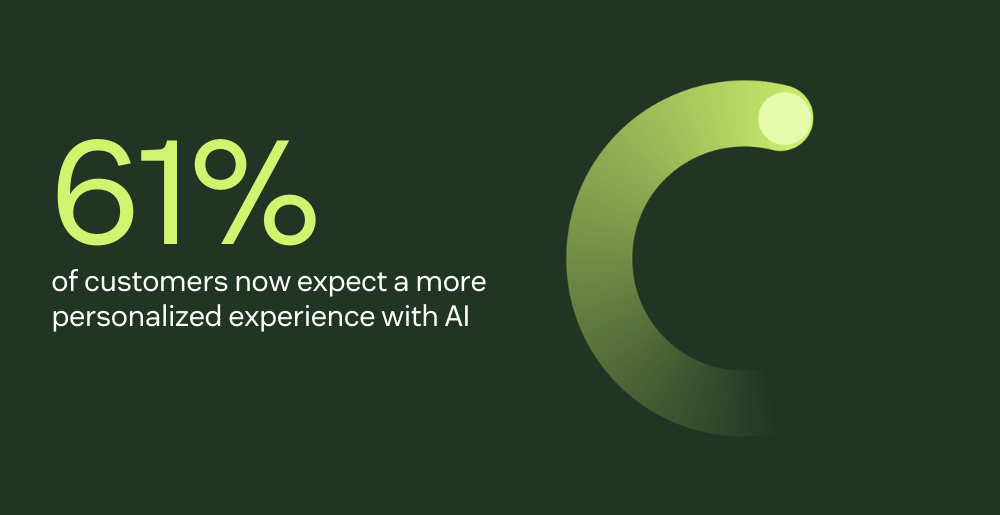
Traditional IVRs are artifacts of a pre-AI era. Their rigid structures cannot deliver the personalized experiences that are now a baseline expectation. Consumers have evolved, but the phone menu hasn’t. According to the Zendesk CX Trends Report 2025, 61% of consumers expect more personalized service with AI. “Press 1 for Sales” simply cannot clear that bar.
Consider SupportZebra, a BPO managing critical triage for healthcare providers. Their legacy infrastructure and complex IVR was cumbersome, and since traditional IVRs don’t adapt dynamically, if a caller took a wrong turn in the menu, they were stuck in a web of blind spots. Supervisors couldn’t monitor live calls and agents were forced to juggle disjointed tools just to track patient data. The rigidity was a liability and a failure of the system. Every misdirected call inflated Average Handle Time (AHT), frustrated customers and tanked agent productivity; an outcome businesses can no longer afford.
Prioritize conversation over boxes
Speech is the most natural form of human connection, yet businesses have historically forced customers into artificial paths corresponding to keypad numbers. Conversational Voice AI flips this dynamic by prioritizing conversation over menu navigation.
The shift here is fundamental: we are moving from Input (DTMF tones) to Intent. Instead of forcing a customer to self-select a category, Voice AI uses Natural Language Understanding (NLU) to decipher intent, sentiment, and context in real time.
This solves the administrative chaos of the branching IVR. Previously, companies spun up thousands of unique phone numbers just to avoid updating complex IVR flows. With Voice AI, operational agility is restored; you don’t need to rebuild a call flow for every new promotion, AI simply understands the new context.
The technical evolution: beyond bolted-on tools
What actually makes for a great Voice AI experience?
To transform the experience, your architecture requires three distinct capabilities:
- Zero-latency Speech-to-Speech: Legacy voice bots often use a speech to text to LLM and back pipeline. This tends to create awkward pauses that kill the natural flow of conversation. Modern Speech-to-Speech models process audio directly. This eliminates the awkward pauses found in legacy pipelines and allows for natural interruptions.
- True polyglot fluency: The world isn’t monolingual, and your AI shouldn’t be either. Advanced Voice AI understands regional dialects and switches languages mid-sentence to support a global customer base.
- Deep contextual integration: Instead of bolting-on tools, AI must integrate into a unified data fabric. This enables agent copilots to seamlessly exchange context dynamically with human agents, resolving issues faster.
Voice AI is advancing at a lightning pace, but don’t expect autonomous voice agents to handle all calls at scale just yet. What’s important now is recognizing the huge value in retiring the traditional IVR system.
Killing the IVR is the crucial first step on the path to smarter, better voice experiences. For customers, this welcome change frees them from navigating the complexity of a company’s service organization. For businesses, by infusing AI throughout the contact center, they can push towards automating up to 80% of routine interactions through self-service and Voice AI agents, freeing human experts for high-value, complex interactions.
A new era of customer experience and contact center agility
Killing the IVR fundamentally transforms the economics of your contact center. By replacing rigid, legacy infrastructure with Voice AI, businesses stop managing call flows and start managing resolutions.
- Operational liberation and cost reduction: Retiring legacy hardware eliminates the drain of expensive maintenance contracts and the need for IT intervention for every minor menu update. You gain the agility to deploy new workflows instantly, slashing operational overhead.
- Data-driven efficiency: When customers are understood on the first try, you eliminate the dead ends and misroutes that inflate Average Handle Time (AHT). This creates a frictionless path to resolution.
- Sentiment recovery as a growth lever: A single empathetic, conversational experience can reverse the damage of previous negative interactions. By solving issues immediately rather than forcing navigation, you protect Customer Lifetime Value (CLV) and turn potential churn into renewed loyalty.
- Trust: When technology acts as a knowledgeable partner rather than a barrier, brands foster deeper trust, proving to the customer that their time is a priority.
The beginning of a smarter future
This is a critical moment for companies to rethink voice interactions. The era of robotic voice menus is ending and it’s time for your business to replace it with Voice AI that’s intuitive and deeply integrated into the contact center ecosystem.
The reality check is simple: Voice AI is no longer hype; it is actively reshaping customer connections.
Zendesk Contact Center is the world’s most complete voice solution for the AI era, specifically designed to help organizations escape the robotic maze, ensuring customers get the help they need, and agents the tools and space to excel. It’s ready to use on day one, meaning you can retire your legacy infrastructure without facing a lengthy setup process or months of complex retraining.
Killing the IVR is not the end goal, it is just the beginning of a smarter AI-driven future.


