13 AI chatbots to help boost sales in 2026
Explore the best AI chatbots to guide customers to the right products and boost sales. Try for free.

Última actualización en March 6, 2026
The chatbot market
Due to the growth and development of chatbot software in recent years, most of us have interacted with a company through an AI chatbot for sales. AI chatbots are affordable, relatively simple to implement, and massively effective at driving efficiency, making them integral to any modern sales or support strategy. Combined with sales force automation software and a sales CRM, they’re guaranteed to improve your company’s sales experience.
AI chatbots need to be strategically implemented and monitored in order to create a positive user experience. By following best practices, companies can design, deploy, and manage their chatbots in a way that achieves this experience for both customers and employees.
When it comes to sales, the best sales chatbots work 24/7 to answer questions and advise customers on finding the right product. In this guide, we’ll run through the top 13 AI chatbots for sales, how AI-powered chatbots drive sales, and best practices.
More in this guide:
- What is an AI chatbot for sales?
- Best sales chatbots comparison chart
- Top 13 AI chatbots for sales
- How can AI-powered chatbots drive sales?
- Best practices of AI chatbots for sales
- Frequently asked questions
- Turn every chatbot into a sales partner
What is an AI chatbot for sales?An AI chatbot for sales is a conversion-focused digital sales assistant. Unlike traditional chatbots that can only provide information found on rigid scripts, AI chatbots for sales use conversational AI, natural language processing (NLP), machine learning, and knowledge base integration to understand buyer intent, answer complex questions, and move prospects through the sales funnel. Essentially, the best sales chatbots are ‘always-on’ sales development representatives that live on your website and messaging apps, speak multiple languages, and personalize every interaction. AI chatbots for sales take the load off your team by instantly answering questions 24/7, connecting with your CRM, and automating sales processes. All this while boosting sales and ROI. |
Best sales chatbots comparison chart
Sales chatbots have evolved into autonomous AI-powered agents that qualify leads, book meetings, and drive revenue 24/7. This comparison chart highlights the top platforms based on their key features, pros, and cons. Use this guide to compare each solution's price and free trial options and assess which best aligns with your business goals.
|
Software |
Best for |
Starting price |
Free trial |
|
Zendesk |
AI-powered and human support balance |
$55 per agent/month (billed annually) |
14 days |
|
Ada |
Automation of routine service tasks |
Custom pricing |
14 days |
|
ChatLab |
E-commerce businesses looking for a simple solution |
$18 per month |
3 days |
|
MirrorFly |
Customizable in-app engagement tools |
$399 per month |
21 days |
|
ZoomInfo |
Sales-led B2B organizations focused on account-based marketing |
Custom pricing |
7 days |
|
Tidio |
Small businesses |
$25 per month |
7 days |
|
HubSpot |
Growing teams looking for an integrated CRM |
$0 per month (for up to 5 users) |
14 days |
|
Drift |
B2B enterprises focused on account-based marketing |
Custom pricing |
30 days |
|
Intercom |
Fast-growing companies seeking contextual chat automation |
Custom pricing |
14 days |
|
ProProfs |
SMBs looking for a basic automation solution |
$19.99 per user/month |
15 days |
|
Crisp |
Growing teams seeking an affordable chat-first solution |
$95 per month |
30 days |
|
Aivo |
Large enterprises seeking a highly secure solution |
Custom pricing |
30 days |
|
Chatfuel |
Automating social media and WhatsApp communications |
$12.04 per month |
7 days |
Top 13 AI chatbots for sales
AI chatbots for sales have transitioned from simple FAQ tools to autonomous revenue agents capable of guiding customers through the entire sales funnel. These platforms allow teams to provide personalized, 24/7 engagement that scales without increasing headcount. Compare the top 13 AI chatbots for sales and find the right technology for your specific sales goals.
- Zendesk: Best for AI-powered and human support balance
- Ada: Best for automation of routine service tasks
- ChatLab: Best for e-commerce businesses looking for a simple solution
- MirrorFly: Best for customizable in-app engagement tools
- ZoomInfo: Best for sales-led B2B organizations focused on account-based marketing
- Tidio: Best for small businesses
- HubSpot: Best for growing teams looking for an integrated CRM
- Drift: Best for B2B enterprises focused on account-based marketing
- Intercom: Best for fast-growing companies seeking contextual chat automation
- ProProfs: Best for SMBs looking for a basic automation solution
- Crisp: Best for growing teams seeking an affordable chat-first solution
- Aivo: Best for best for large enterprises seeking a highly secure solution
- Chatfuel: Best for automating social media and WhatsApp communications
1. Zendesk
Best for AI-powered and human support balance
|
Starting price |
Free trial |
Key features |
|
$55 per agent/month (billed annually) Explore more Zendesk pricing plans. |
14 days |
|
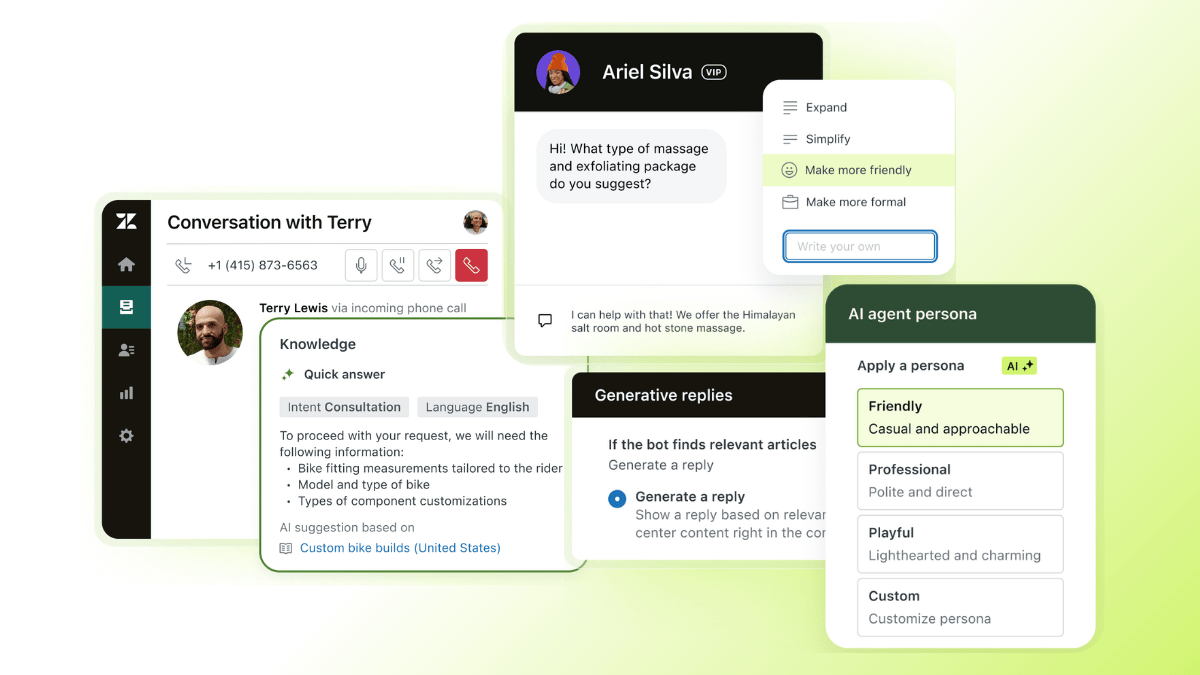
Zendesk’s AI agents answer questions instantly, guide customers, and hand off to humans when needed, making them a powerful tool for capturing, nurturing, and converting leads. These AI chatbots reduce drop-off by providing fast support and keeping high-intent shoppers moving toward purchase. Beyond basic FAQs, Zendesk's AI agents are designed to handle complex conversations and deliver always-on support, ensuring customers get the right help at the right time.
For sales-focused chat experiences, Zendesk stands out with knowledge-powered answers, including generative search for prospects and agents to instantly find information and replies for fast conversations. Plus, businesses can keep responses consistent and on-brand using customizable instructions and AI personas. Intelligent routing sends qualified leads’ conversations to the right agent when a personal touch is needed to close the deal. Zendesk also earns extra points for its ‘build once, deploy everywhere’ capability across messaging channels.
Combining autonomous AI agents and AI Copilot with strong knowledge, messaging, and routing capabilities in one platform, Zendesk is best for teams looking for an AI and human support balance. It's the perfect choice for companies needing a conversion-friendly sales chatbot that can resolve common questions fast, stay on-brand, and smoothly hand off to humans when the conversation turns high-stakes.
|
Pros |
Cons |
|
|
What people are saying:
- “What I like the most about Zendesk is that it is very user-friendly. It is easy to navigate and you can easily go from one profile to another.”—Verified user, G2 Review.
- “Additionally, due to its advanced features, it allows customization according to the company's specific needs and is easy to set up.”—Verified user, G2 Review.
- “The interface is clean and well-organized, which makes it simple to manage multiple conversations across channels like email, chat, and social media all in one place.”—Verified user, G2 Review.
2. Ada
Best for automation of routine service tasks
|
Starting price |
Free trial |
Key features |
|
Custom pricing |
14 days |
|
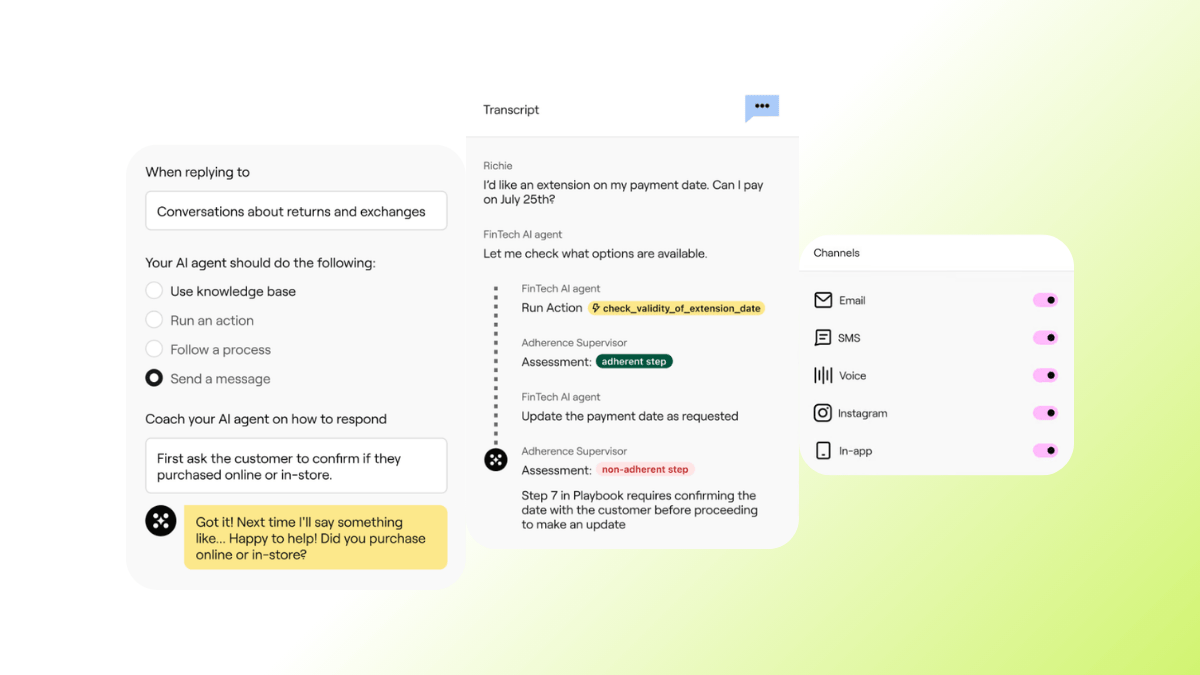
Ada is an AI-powered customer service platform that automates interactions through a reasoning engine. It provides enterprises with a tool to scale support by resolving inquiries autonomously across web, mobile, and social channels. The platform features a no-code builder and natural language processing to understand customer intent.
Ada integrates with systems like Zendesk to perform tasks such as updating accounts and can escalate complex issues to human agents with full context. Users value Ada's ease of use and high automation rates. However, some note complex implementation and AI limitations. It is best for large enterprises aiming to automate high volumes of routine service tasks.
|
Pros |
Cons |
|
|
What people are saying:
- “It's very easy to use, and whenever we need assistance with creating something, we always receive excellent support from the Ada team.”—Verified user, G2 Review.
- “While Ada’s platform is powerful and user-friendly, it can feel a bit limited when it comes to building more dynamic workflows or adapting the conversation logic automatically based on user intent.”—Verified user, G2 Review.
- “Ada's implementation and maintenance was quite heavy lift.”—Verified user, G2 Review.
Learn more: Discover how Ada integrates with Zendesk.
3. ChatLab
Best for e-commerce businesses looking for a simple solution
|
Starting price |
Free trial |
Key features |
|
$18 per month |
3 days |
|
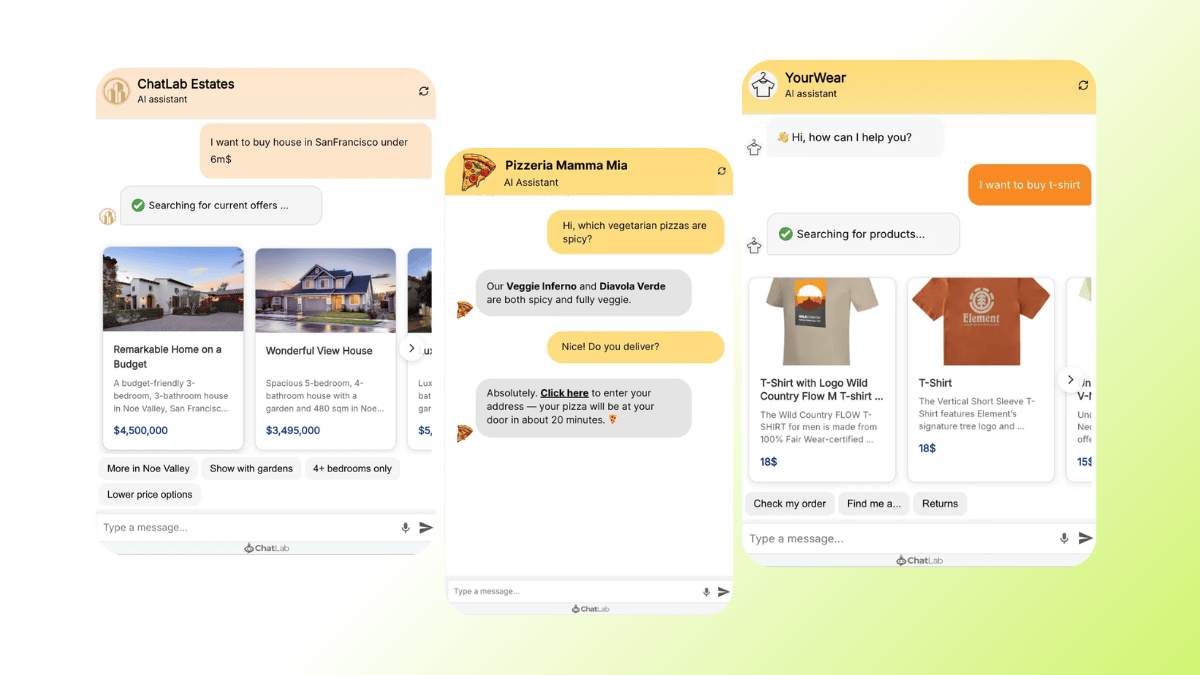
ChatLab is an AI platform designed to help businesses automate customer support and sales via no-code chatbots. Using a reasoning engine, it learns from a company’s website, documents, and FAQs to resolve inquiries autonomously. The platform is built to help small and mid-sized businesses scale 24/7 digital assistance across various web and e-commerce channels.
The software includes lead generation tools and identifies when to escalate complex issues to a human agent with full context. It also integrates with platforms like Shopify and WooCommerce to provide real-time product recommendations and order tracking.
ChatLab users value the platform's fast setup and effective automation of routine tasks. However, some find entry-level plans limited and report app lags and glitches. Considering this, ChatLab is best for e-commerce businesses looking for a simple solution to automate customer service and boost sales.
|
Pros |
Cons |
|
|
What people are saying:
- “Chatbot is very easy and fast solution, to get intelligent bot support in website.”—Verified user, Truspilot Review.
- “Sometimes the app lags when used for a long time.”—Verified user, G2 Review.
4. MirrorFly
Best for customizable in-app engagement tools
|
Starting price |
Free trial |
Key features |
|
$399 per month |
21 days |
|
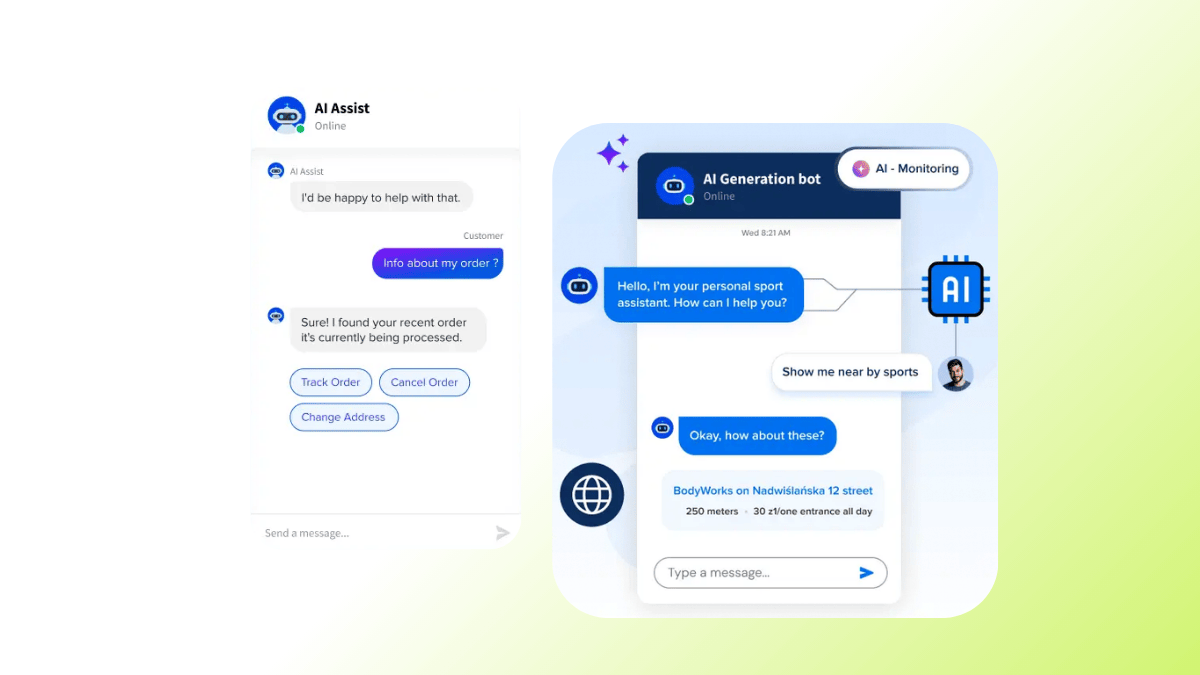
MirrorFly is an in-app communication platform that provides enterprise-grade SDKs and APIs for integrating chat, voice, and video into digital products. It offers both self-hosted and cloud-based models, allowing businesses to maintain full data ownership or deploy rapidly. The platform's key features include a customizable UI, AI agents for automated responses, e-commerce integrations, and handoffs to human agents.
MirrorFly's users value the extensive security and white-labeling capabilities. However, some find the documentation limited and the initial integration complex. It is best for enterprises needing highly secure, fully customizable in-app engagement tools.
|
Pros |
Cons |
|
|
What people are saying:
- “We quite like the overall experience offered by the suite on all aspects of scalability, security and user-friendliness.”—Verified user, G2 Review.
- “Somehow, its cost is too high compared to other existing platforms in the market.”—Verified user, G2 Review.
- “[...] there is definitely an opportunity to provide a few more personalized options.”—Verified user, G2 Review.
5. ZoomInfo
Best for sales-led B2B organizations focused on account-based marketing
|
Starting price |
Free trial |
Key features |
|
Custom pricing |
7 days |
|
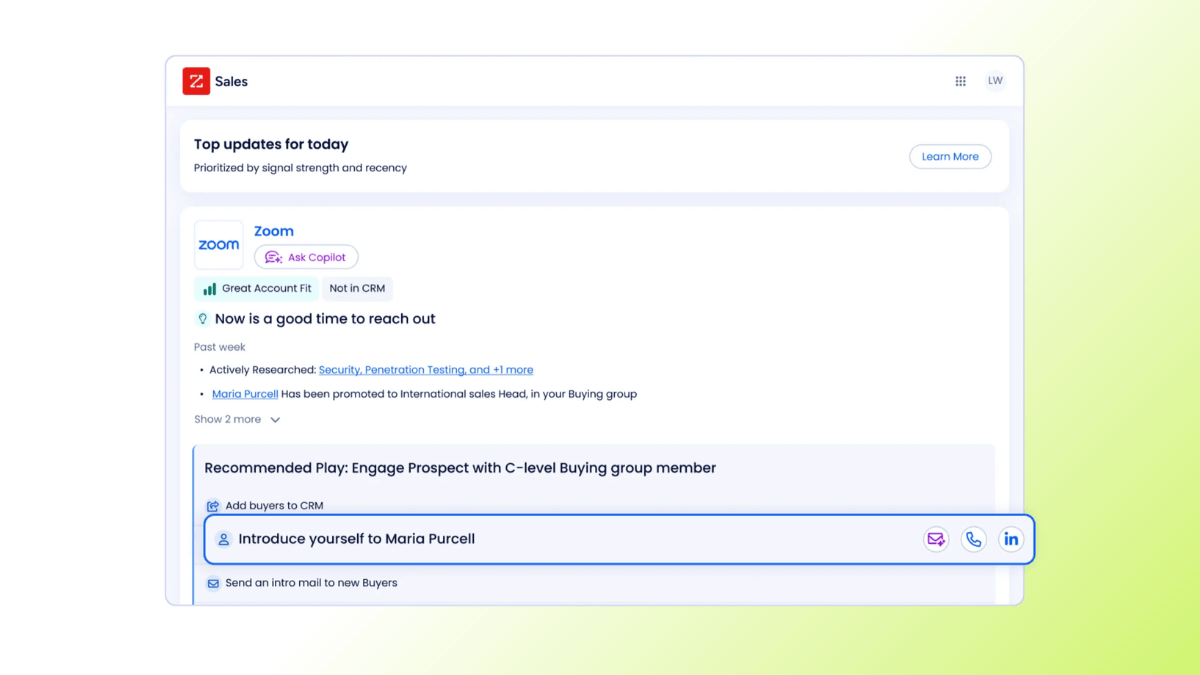
ZoomInfo Chat is a B2B conversational marketing platform that connects website visitors to sales teams in real time. Functioning as part of a broader go-to-market platform, it qualifies leads and automates meeting bookings. ZoomInfo is primarily built for revenue teams focused on identifying and engaging high-value prospects during their initial visit.
The platform uses AI agents to personalize conversations based on company size, industry, and buying intent. It features automated routing, custom conversation flows, and account-based targeting to ensure high-priority leads reach the right team member with full context. Additionally, ZoomInfo integrates with CRM systems to sync lead data and provide detailed conversation analytics to track sales performance.
ZoomInfo's deep integration with firmographic data and the efficiency of the automated scheduling tools are praised by users. However, the platform’s custom pricing can be high, and its full value is often restricted to those already within the ZoomInfo ecosystem. All this makes ZoomInfo best for sales-led B2B organizations focused on account-based marketing.
|
Pros |
Cons |
|
|
What people are saying:
- “The data is deep and easy to filter, contact details are reliable, and intent signals help prioritize accounts that are actually in-market.”—Verified user, G2 Review.
- “While ZoomInfo Sales offers robust capabilities, its primary downside is the cost, which may be prohibitive for smaller teams or organizations that are still expanding.”—Verified user, G2 Review.
- “The primary area for improvement is the pricing structure, which can be quite expensive for smaller teams or individual developers.”—Verified user, G2 Review.
6. Tidio
Best for small businesses
|
Starting price |
Free trial |
Key features |
|
$25 per month |
7 days |
|
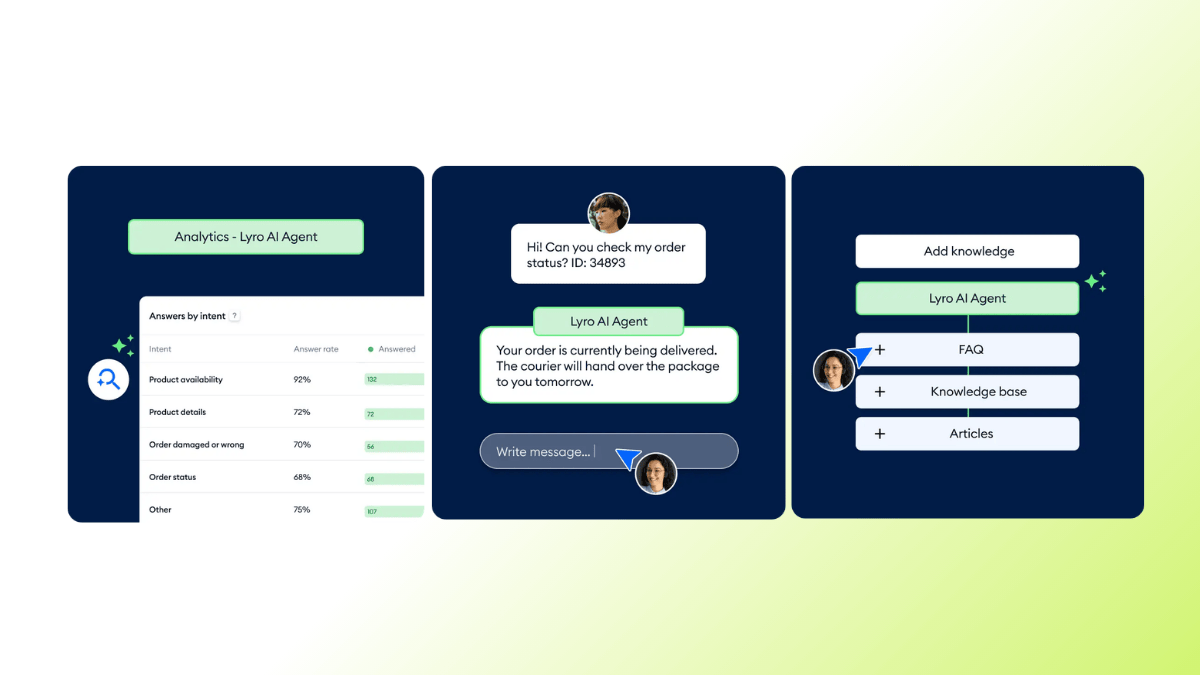
Tidio combines live chat with AI agents to help small and mid-sized businesses manage visitor interactions. Centralizing messages from various channels into a single panel, Tidio is designed to help teams engage visitors in real time and automate routine support and sales tasks.
The platform features a visual builder for creating automated workflows and uses natural language processing to resolve common questions autonomously. It provides 24/7 support through knowledge-powered responses and includes lead generation tools to capture visitor information. Additionally, Tidio’s chatbot escalates to human agents when complex issues arise and provides analytics to track team performance.
Users value Tidio's ease of use and quick setup process. However, some find the mobile app limited and the automation triggers occasionally restrictive on lower-tier plans. It’s best for small businesses looking for an intuitive, all-in-one chat and automation tool to boost sales and support.
|
Pros |
Cons |
|
|
What people are saying:
- “I like that Tidio is very user friendly and simple to use. It's incredibly easy to install, which I appreciate.”—Verified user, G2 Review.
- “The mobile app can occasionally feel slightly less responsive compared to the desktop version.”—Verified user, G2 Review.
- “One of the main features of Tidio is its chatbot automation and this feature cannot be accessed in the free plan [...]”—Verified user, G2 Review.
7. HubSpot
Best for growing teams looking for an integrated CRM
|
Starting price |
Free trial |
Key features |
|
$0 per month (for up to 5 users) |
14 days |
|
HubSpot is a CRM platform that connects marketing, sales, and service teams through a shared data ecosystem. It provides a centralized hub to manage customer interactions and streamline business growth. The software is designed to help organizations of all sizes attract and engage customers across the entire buying journey.
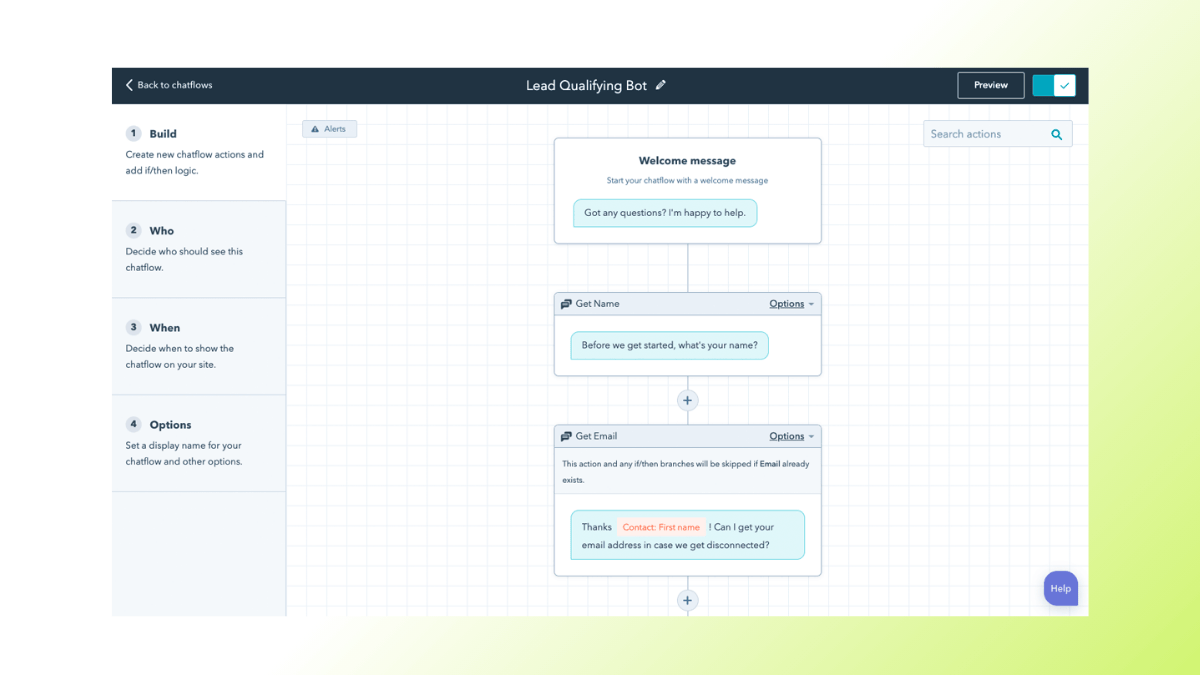
HubSpot's AI agents automate customer conversations and provide 24/7 instant answers to common questions. The platform includes a no-code builder for creating custom conversation flows and offers intelligent triage to route leads to the right team member. Additionally, HubSpot provides proactive engagement tools, knowledge-powered responses, and detailed reports to track sales performance and customer satisfaction.
Ease of use and seamless connection between marketing and sales data are some of HubSpot's pros. Still, some users find that advanced features require expensive tier upgrades and the interface can become complex as more tools are added. All things considered, HubSpot is best for growing businesses looking for an integrated CRM to align their teams and automate customer interactions.
|
Pros |
Cons |
|
|
What people are saying:
- “What I like most about HubSpot Sales Hub is that it keeps everything organized in one place.”—Verified user, G2 Review.
- “Some advanced features require higher-tier subscriptions, which can make scaling expensive as more team members need access.”—Verified user, G2 Review.
- “The multitude of features, dashboards and interfaces may confuse the new users of Hubspot in the beginning.”—Verified user, G2 Review.
Learn more: Discover how HubSpot integrates with Zendesk and how Zendesk vs. HubSpot compare.
8. Drift
Best for B2B enterprises focused on account-based marketing
|
Starting price |
Free trial |
Key features |
|
Custom pricing |
30 days |
|
Drift is a buyer engagement platform that uses AI agents to streamline interactions between B2B organizations and their customers. The software focuses on conversational marketing and sales, helping businesses identify high-value website visitors in real time. Its instant, automated conversations qualify prospects 24/7.
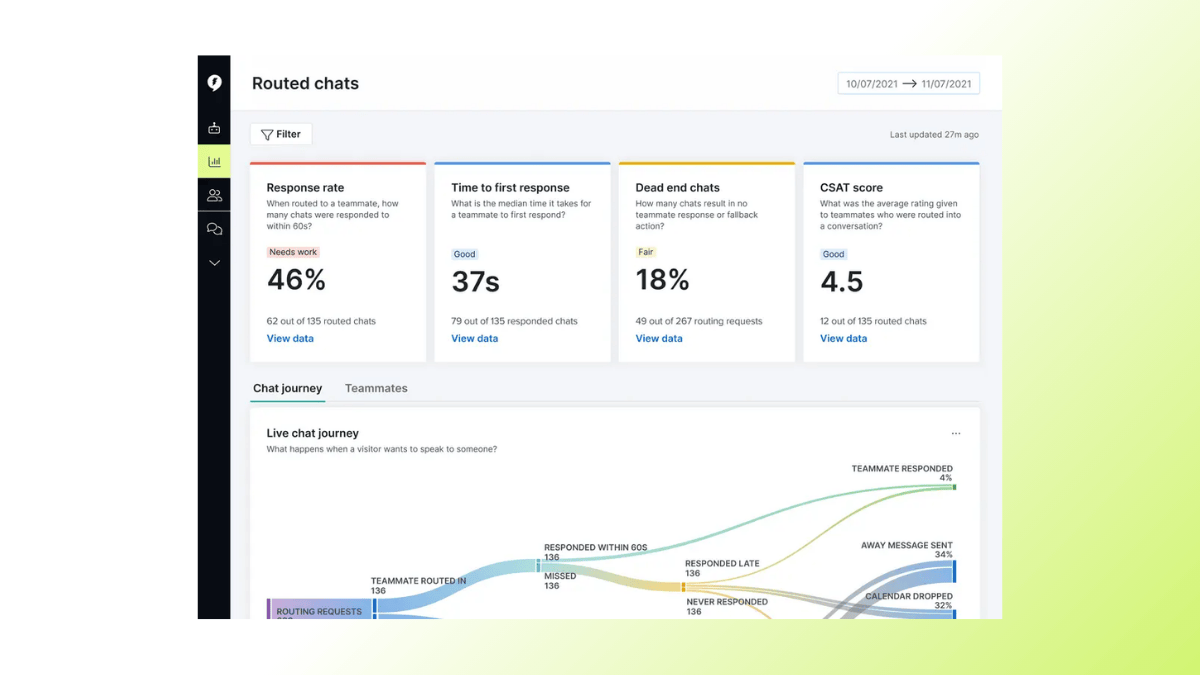
The platform features customizable AI agents that provide instant answers to common pre-sales questions and personalized product recommendations. Drift also includes intelligent triage to route leads to the right team member and automatically books meetings directly in calendars. Proactive engagement tools, multilingual support, and detailed reporting and analytics are also available.
Users highlight Drift's deep integration with CRM systems, but some find the initial setup of complex conversation flows time-consuming. All in all, Drift is best for B2B enterprises focused on account-based marketing and high-velocity sales.
|
Pros |
Cons |
|
|
What people are saying:
- “What I appreciate most about Drift is its ability to transform website chats into immediate sales opportunities.”—Verified user, G2 Review.
- “Additionally, the cost is quite high, making it more appropriate for enterprise-level teams.”—Verified user, G2 Review.
- “The implementation process, while straightforward for basic setups, can become complicated when integrating with multiple systems.”—Verified user, G2 Review.
9. Intercom
Best for fast-growing companies seeking contextual chat automation
|
Starting price |
Free trial |
Key features |
|
Custom pricing |
14 days |
|
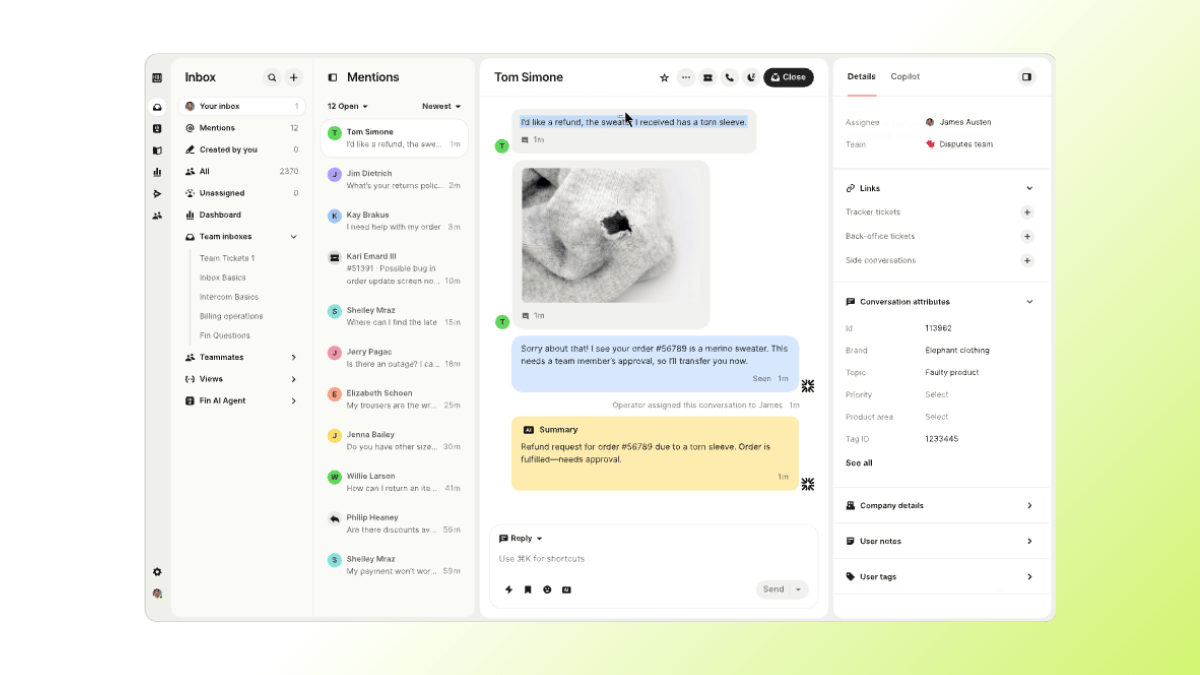
Intercom uses AI to connect support, sales, and marketing teams with their customers. The software is built around a centralized messenger and a shared inbox, allowing businesses to manage interactions across websites, apps, and social channels. It’s designed to help teams provide real-time assistance and automate routine tasks through a conversational interface.
The platform's key features include an AI agent that provides 24/7 instant answers to common questions by pulling information from a company's knowledge base. Intercom also includes a no-code builder for creating custom conversation flows and offers intelligent triage to route leads to the right team member. Additionally, Intercom provides proactive engagement tools, such as banners and in-app messages, to guide customers and boost sales.
According to users, some of Intercom's pros are its intuitive design and ability to consolidate multiple communication tools into one place. Others find the pricing model complex, resulting in unpredictable costs, and the lack of native QA to be a significant downside. It’s best for fast-growing companies seeking contextual, conversational chat automation.
|
Pros |
Cons |
|
|
What people are saying:
- “The interface is fast, intuitive, and makes it simple to keep track of ongoing conversations without losing context.”—Verified user, G2 Review.
- “The pricing model creates some uncertainty, since costs depend on resolution.”—Verified user, G2 Review.
- “The cost can quickly add up as you are being charged by resolution as opposed to a flat unlimited monthly rate [...].”—Verified user, G2 Review.
Learn more: Discover how Intercom integrates with Zendesk and how Zendesk vs. Intercom compare.
10. ProProfs
Best for SMBs looking for a basic automation solution
|
Starting price |
Free trial |
Key features |
|
$19.99 per user/month |
15 days |
|
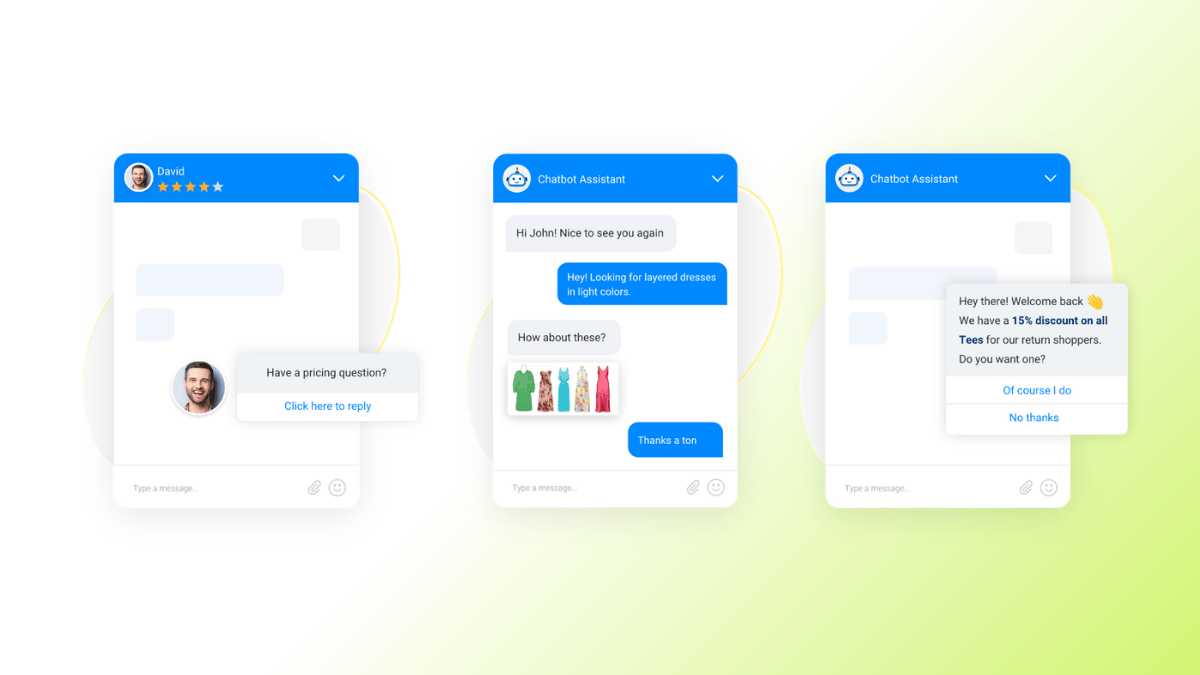
ProProfs Chat is a cloud-based customer support platform that provides live chat and automation tools for businesses. It is designed to help organizations engage with website visitors in real time and streamline support processes. The software integrates with various business applications to centralize customer communications and improve response times.
ProProfs features AI agents that automate routine conversations and provide 24/7 instant answers to common questions. It includes a no-code builder for creating custom conversation flows and offers intelligent triage to handoff conversations to the right agent. Additionally, ProProfs provides proactive engagement tools, knowledge-powered responses, and detailed reports to track team performance and customer satisfaction.
Users value ProProf's straightforward setup and affordable pricing tiers. However, some find the interface dated and report technical issues. It’s best for small to mid-sized businesses looking for an easy-to-use live chat tool with basic automation capabilities.
|
Pros |
Cons |
|
|
What people are saying:
- “The best part we liked about the ProProfs chat is the ease with which we can put it on our website.”—Verified user, G2 Review.
- “User Interface surely needs improvement.”—Verified user, G2 Review.
- “It consistently has tech issues.”—Verified user, G2 Review.
11. Crisp
Best for growing teams seeking an affordable chat-first solution
|
Starting price |
Free trial |
Key features |
|
$95 per month |
30 days |
|
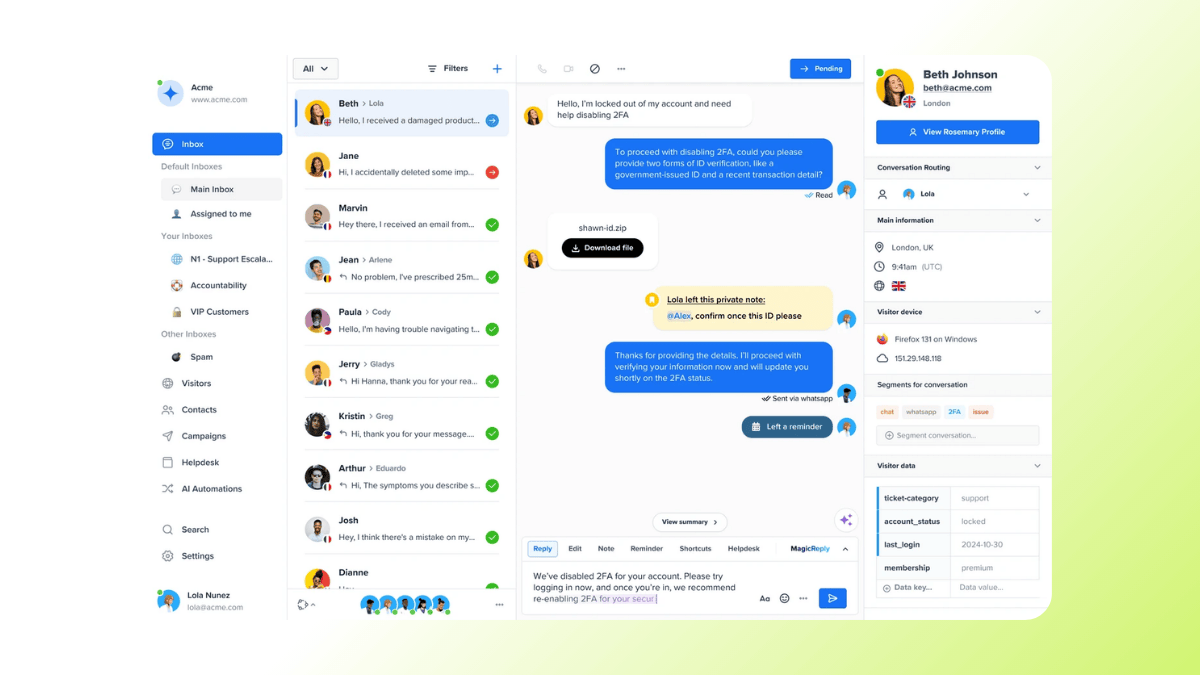
Crisp is a customer communication platform that helps small to medium-sized businesses manage support and sales interactions in real time. The omnichannel shared inbox centralizes messages from websites, emails, and social media. Crisp simplifies customer engagement by providing a unified interface that facilitates rapid responses and team collaboration.
The platform's AI-powered chatbots automate routine inquiries and resolve common questions 24/7. Crisp also features a no-code chatbot builder for creating custom conversation flows, in addition to proactive engagement tools like automated triggers based on visitor behavior. Additionally, Crisp provides a knowledge base for self-service, multilingual support with real-time translation, and detailed analytics to track team performance and customer satisfaction.
Users appreciate Crisp’s intuitive interface and straightforward, flat-rate pricing. However, some find the reporting tools limited and the platform can feel crowded as message volume increases. Crisp is best for growing teams seeking an affordable, chat-first solution to consolidate digital communication channels.
|
Pros |
Cons |
|
|
What people are saying:
- “The interface is clean, it works smoothly on both desktop and mobile, and it’s very easy to train staff on.”—Verified user, G2 Review.
- “The analytic section is too simple and can be improved.”—Verified user, G2 Review.
- “[...] while the platform focuses on adding multiple AI assistant tools that can feel overwhelming and confusing to navigate.”—Verified user, G2 Review.
12. Aivo
Best for best for large enterprises seeking a highly secure solution
|
Starting price |
Free trial |
Key features |
|
Custom pricing |
30 days |
|
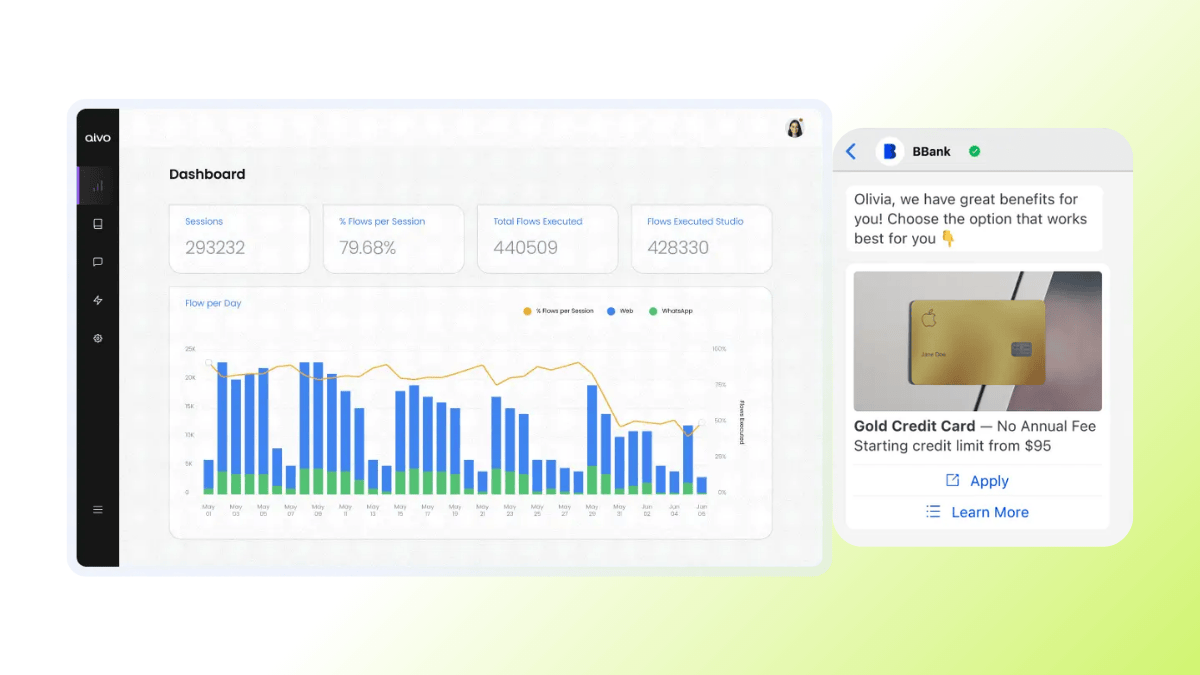
Aivo is an AI-powered conversational platform designed to automate customer service and sales for enterprise-level organizations. The platform focuses on enhancing customer engagement through an ‘AI-first’ suite that supports complex, end-to-end resolutions. It is specifically engineered to handle high-volume interactions across multiple digital channels while maintaining a personalized, human-like dialogue.
Aivo's AI agent uses natural language understanding to resolve routine queries 24/7 without manual intervention. It includes a no-code studio for building custom conversation flows and offers intelligent triage to route high-priority cases to human agents with full context. Additionally, Aivo provides proactive engagement tools for WhatsApp campaigns, knowledge-powered responses, and analytics to monitor resolution rates and customer satisfaction.
According to users, the highlights are the platform's ability to understand informal language and its security certifications for regulated industries. Still, the initial implementation can be complex, and some users find reporting options to be limited. Aivo is best for large enterprises in banking, telecommunications, and retail seeking a highly secure, automated support solution.
|
Pros |
Cons |
|
|
What people are saying:
- “What I like the most is that it makes the clients feel like they are talking to a person, even though in reality it is AI.”—Verified user, G2 Review.
- “Additionally, it would be good if they include a Know How for their implementation.”—Verified user, G2 Review.
- “They should improve the reporting from the platforms to be able to give more granularity to the data.”—Verified user, G2 Review.
Learn more: Discover how Aivo integrates with Zendesk.
13. Chatfuel
Best for automating social media and WhatsApp communications
|
Starting price |
Free trial |
Key features |
|
$12.04 per month |
7 days |
|
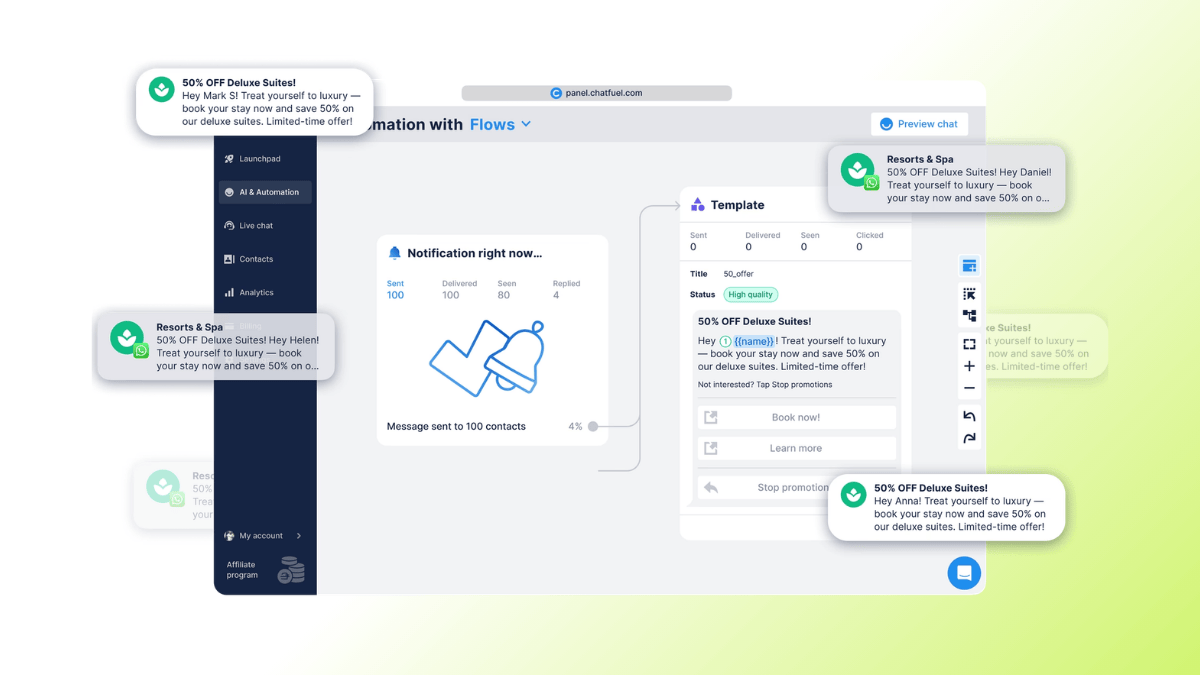
Chatfuel is a conversational AI platform designed primarily for small to mid-sized businesses wanting to automate customer interactions on messaging channels like WhatsApp, Facebook Messenger, and Instagram. It functions as a no-code chatbot builder that helps teams scale their sales and support efforts by providing instant responses to customer inquiries. The software includes a visual flow builder for creating custom conversation flows and proactive engagement tools, such as automated broadcasts and keyword-triggered messages.
Users value Chatfuel's user-friendly interface and its deep integration with Meta’s messaging ecosystem. However, some find the pricing structure expensive as subscriber numbers grow and note that reporting options are limited compared to more complex enterprise tools. Chatfuel is best for e-commerce and marketing teams looking for a straightforward way to automate social media and WhatsApp communications.
|
Pros |
Cons |
|
|
What people are saying:
- “Chatfuel's user experience is amazing. Everything is easy and clear.”—Verified user, G2 Review.
- “Chatfuel does not offer as many functions and for businesses with a great audience it can be expensive for them.”—Verified user, G2 Review.
- “Lack of reporting features that I feel our clients really want to see.”—Verified user, G2 Reviews.
How can AI-powered chatbots drive sales?
It’s a given that AI-powered chatbots save companies time (and therefore money). Any simple interaction handled by a chatbot is one fewer customer ticket that needs to be handled by a live rep. This frees your support team to focus on customers with more complex issues that call for the interpersonal skills and knowledge of a real person.
There are all kinds of benefits of chatbots. Here are just a few ways AI-powered chatbots can drive sales and improve the sales process.
Lead generation
AI chatbots can do a lot more than just solve problems. While many customers interact with chatbots once they’ve already purchased products, potential buyers also interact with them on their way into the sales funnel. Website and social media chatbots are excellent channels for curious consumers to ask questions, find information, and connect with your sales team.
This means AI chatbots can generate leads. Some companies use information-capture prompts to ask for names and emails, but you can also use your bot to redirect leads to a demo request or an appointment-scheduling app.
Down the line, chatbots can further assist your sales pipeline by optimizing conversions. Especially if your company deals in e-commerce sales, chatbots can maximize revenue by handling transactions outside of working hours and monitoring abandoned carts. They can also suggest cross-sell and upsell opportunities based on customer purchase history or a prospect’s existing cart.
Building customer and prospect profiles
AI chatbot analytics reveal a lot of valuable information about your prospects. Even if prospects aren’t engaging in long conversations with your bot, looking at which channels they’re coming from helps determine where your sales and marketing efforts are best spent. For instance, if 60% of your bot engagement comes from social media, but only 30% of your marketing is geared that way, you might want to readjust.
Similarly, if you notice that most of the chatbot cases passed to live agents come from your website, then that’s the channel you want your reps to keep an eye on. Tracking lead management is the fastest way to understand and build more accurate customer and prospect profiles.
Account prioritization
Sales teams can’t afford to spend manual effort on every lead that enters the funnel. To maximize productivity and reach revenue targets, companies use lead qualification to prioritize high-value accounts. With AI-powered chatbots, teams can automate this process using intent-based questions to manage sales opportunities and route the most promising prospects to human agents in real time.
The best sales chatbots not only help qualify leads, but they also make sure that only the necessary conversations are passed on to live agents. This means that your reps are exclusively spending their time with prospects who are qualified, interested, and invested in complex inquiries. Adding a chatbot to the beginning of your sales playbook is a key step towards maximizing rep time and efficiency.
Best practices of AI sales chatbots
Before we jump into the best chatbots on the market, let’s take a look at a few strategies for getting the most out of your purchase.
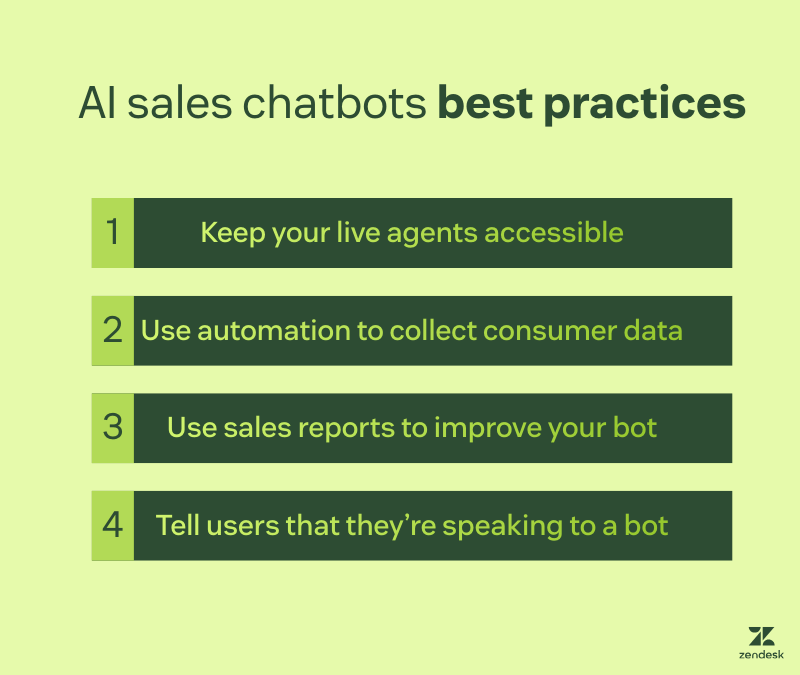
Keep your live agents accessible
According to our CX Trends Report, 46 percent of customers become frustrated when they can’t choose between a bot and a human—and even more frustrated when their issue can’t be escalated. It's true that human agents aren't needed for every single interaction, but this doesn’t mean they shouldn’t be available.
Try as much as possible to keep your reps available for customers who want them. Also, make sure the AI chatbot for sales you chose handles routing and handoffs seamlessly.
Use conversational flows to automatically collect consumer data
Even if a customer requires a human handoff, AI agents can act as a proactive concierge to set the conversation up for success. Modern AI uses entity recognition to naturally extract and verify key profile details, such as account IDs, intent, and sentiment. This ensures your human agents receive rich data context, eliminating the need for customers to repeat basic information once connected.
Use sales reports to improve your bot
Like any other sales tool, your bot needs frequent maintenance and assessment to make sure it’s always working at peak performance. Conversational intelligence is key, and most AI chatbots have the ability to generate analytics and usage reports. These reports are essential to evaluate how useful and effective your sales chatbots are.
Fixes are often simple, such as programming more complete answers or adjusting a widget's color and size. Still, you can only find out the improvements needed once you have enough reporting data available. Using a solution that offers native QA is also a big help.
Tell users that they’re speaking to a bot
Trust is at the core of the sales process. So, being transparent with customers is the fastest way to build it. While AI chatbots can perform human-like conversations that sound natural, customers don't like being lied to.
Disclosing that a conversation is AI-powered sets clear expectations for instant responses and ensures that when a human agent eventually joins the chat, the transition feels like a value-add rather than a reveal of a previous lie.
Frequently asked questions
Turn every chatbot into a sales partner
Chatbots save time, but their real value comes from creating personalized, seamless interactions that drive revenue. Zendesk is a customer service platform with AI agents that can handle customer questions instantly, stay on-brand, and escalate to a human agent when needed.
It also connects with your CRM of choice, adding automation, customer context, reporting, and native QA. With all this, teams can qualify leads, reduce friction throughout the buying journey, and keep conversations consistent across channels. Try Zendesk free for 14 days.